
Tidewater Utilities, inc.

Cross-Connection Control Program

Cross-Connection Control Program Overview

Tidewater is making improvements to protect the safety of drinking water. Here’s why.

A cross-connection is an actual or potential connection between the safe drinking water (potable) supply, and a source of contamination or pollution. Cross-connections can result in a hazardous event known as backflow, which can draw those contaminants into your drinking water supply.

Delaware’s Department of Health Code 4462 prohibits hazardous interconnections to public water systems and requires all public water systems to develop a comprehensive Cross-Connection Control Program.
Step 1

TUI implements mandatory Cross-Connection Control Program (CCC).

Step 2
Postal Notification

TUI sends notifications informing water customers that backflow preventers must be tested annually. Facility Assessments/ Inspections for Cross-Connection Hazards are required as specified within the TUI CCC plan. Instructions and due dates are included in notifications.

Step 3
Onsite Inspection/ Survey

TUI conducts inspections and customer must hire an ASSE Approved Backflow Preventer Tester.
Submit test data to TUI >
Step 4
Data/ Corrective Action

If cross-connections are identified during the inspection, the water customer is provided written instructions for modifications and a mandatory compliance date.
Step 5
Compliance Verification

Annual Backflow preventer test and inspection records confirmed and maintained by TUI as required by law.
 

Frequently Asked Questions (FAQs)

PART I: INSPECTIONS / SURVEYS

What is Cross Connection?A cross-connection is an actual or potential connection between the safe drinking water (potable) supply and a source of contamination or pollution. Cross-Connections must be properly protected or eliminated.

A public water supplier may determine that water service connections shall be inspected (with appropriate notification in advance) for potential cross-connection hazards.

A typical cross-connection inspection takes 5-15 minutes.

Building owners are responsible for costs associated with corrective action/non-compliance.

Yes. If a service connection owner is notified of a mandatory inspection, compliance is required. These inspections are conducted in order to ensure compliance with state regulations to maintain the safety of your drinking water.

Penalties for refusing to cooperate with inspections and/or refusing to make needed repairs are determined by your local water utility. These typically can include termination of water service.

PART II: BACKFLOW PREVENTION ASSEMBLY TESTING

Just like any other mechanical device, backflow prevention assemblies are prone to wear and tear, and do break down from time to time. Regular testing is required in order to ensure that your device remains in proper working order.

Testable Assembly Backflow Preventers shall be tested by an ASSE Certified tester at least annually and at time of initial installation. A test record for each Backflow Preventer is required to be submitted to the local public water supplier as specified in the local Cross-Connection Control Program Plan.

PART III: GENERAL RESOURCES

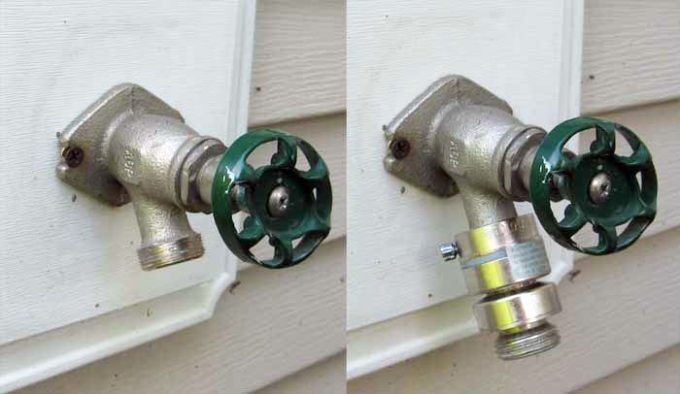
Example: Hose connection vacuum breakers
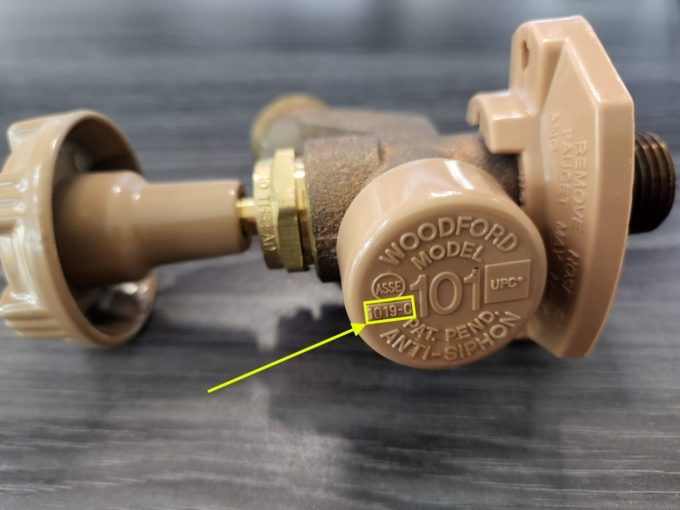
Example: Integrated vacuum breaker on outside hose spigot.
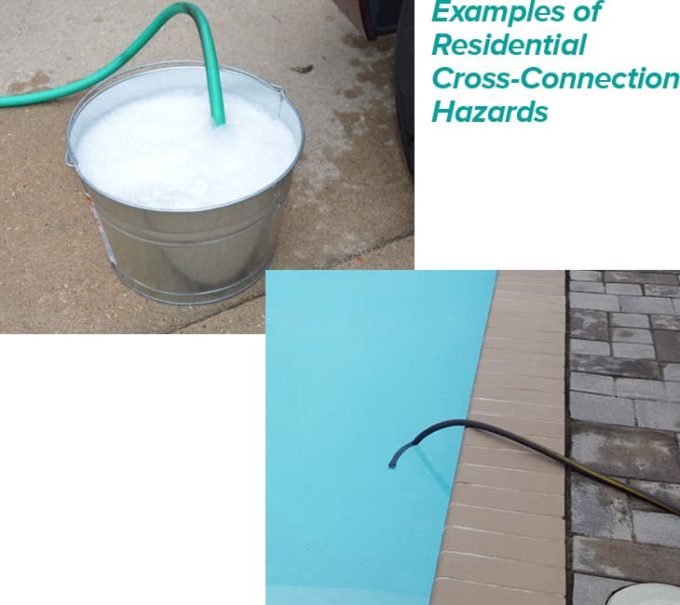
 

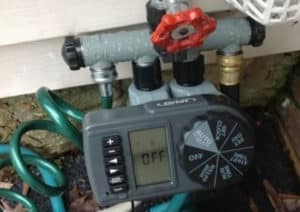
Incorrect continuous pressure installationVacuum breaker should not be subject to continuous pressure like the example here illustrates. (This type of irrigation set up/system would need to be corrected.)

These require periodic performance testing by a  Certified Tester.


Pressure Vacuum Breaker Assembly


Reduced Pressure Principle Backflow Prevention Assembly
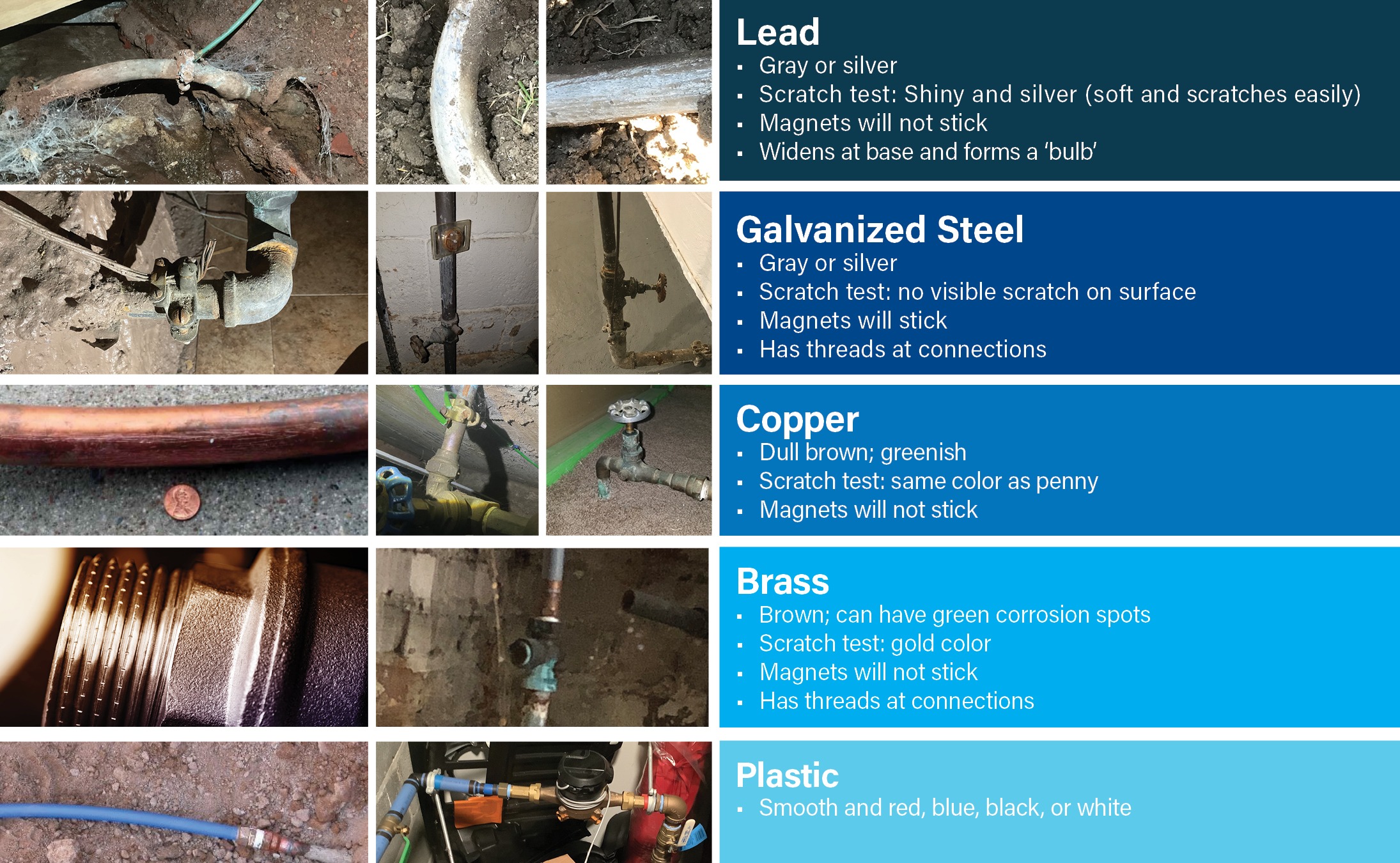
MATERIALS VERIFICATION TEST

The Materials Verification Test below can help you figure out if you have a lead, galvanized steel, copper, or plastic service line on the portion of the service line you own. When you have completed the visual inspection, please submit your results using the following survey link. If you have a lead or galvanized steel service line, Middlesex Water will contact you to confirm the results and schedule your service line replacement.

What you need:

  1. House key or coin
  2. Strong refrigerator magnet

Steps to check your service line:

  1. Find the water meter in your basement or outside your home and look at the service line that enters the water meter.
  2. Use the house key or coin to carefully scratch the pipe surface.
  3. Compare the scratched area to the following descriptions:
    • If it looks shiny and silver, the pipe is made of lead. A magnet will not stick to a lead pipe.
    • If it is a dull gray color with no noticeable scratch on the surface, the pipe is galvanized steel. A magnet will stick to a galvanized steel pipe.
    • If it is the same color as a penny, the pipe is copper. A magnet will not stick to a copper pipe.
    • If it is smooth and red, blue, white, or black, the pipe is plastic. A magnet will not stick to a plastic pipe.
  4. Report your service line material in this SURVEY

ENTERPRISE ENVIRONMENTAL POLICY

THE MIDDLESEX WATER ENTERPRISE WILL:

• Comply with, or produce results better than, applicable laws and regulations set forth by state utility commissions and government environmental regulatory agencies.

• Include the consideration of environmental impact in all business strategies, initiatives and project plans.

• Work to ensure a reliable source of water supply.

• Promote respect for the environment as part of our Company’s culture among employees and our suppliers in their daily operations.

• Focus on reducing the amount of water lost (non-revenue) in our distribution system and employ leak detection and other available technology to achieve this goal.

• Prevent pollution, reduce waste and minimize the consumption of resources to minimize risks to the environment.

• Continually work to educate customers about the importance of protecting and preserving our natural resources and the importance of wise water use.

• Educate, train and motivate employees to carry out tasks in an environmentally responsible manner.

• Build in system resiliency to mitigate effects of climate change and other short and long-term climate related challenges.

• Use efficient practices that save fuel, energy and water.

• Work with our industry and legislative representatives to shape public policy and legislation that supports water objectives and helps ensure safe drinking water.

• Invest prudently in our systems for infrastructure stability, operational resiliency and continued sustainability utilizing sound asset management planning.

• Engage with our community to ensure responsiveness to local needs and interests.

• Work in collaboration with our communities, local municipal officials and our vendors to ensure a clean, safe, reliable and resilient water supply.